
Product Invoice in New Zealand
Product invoices are used in New Zealand when the business requests payment for the products or goods that have been dispatched or delivered to the customer. Although the content of the product invoice is the same as the invoice, it is specifically used for the invoices generated and sent for the products which are delivered to the customers.
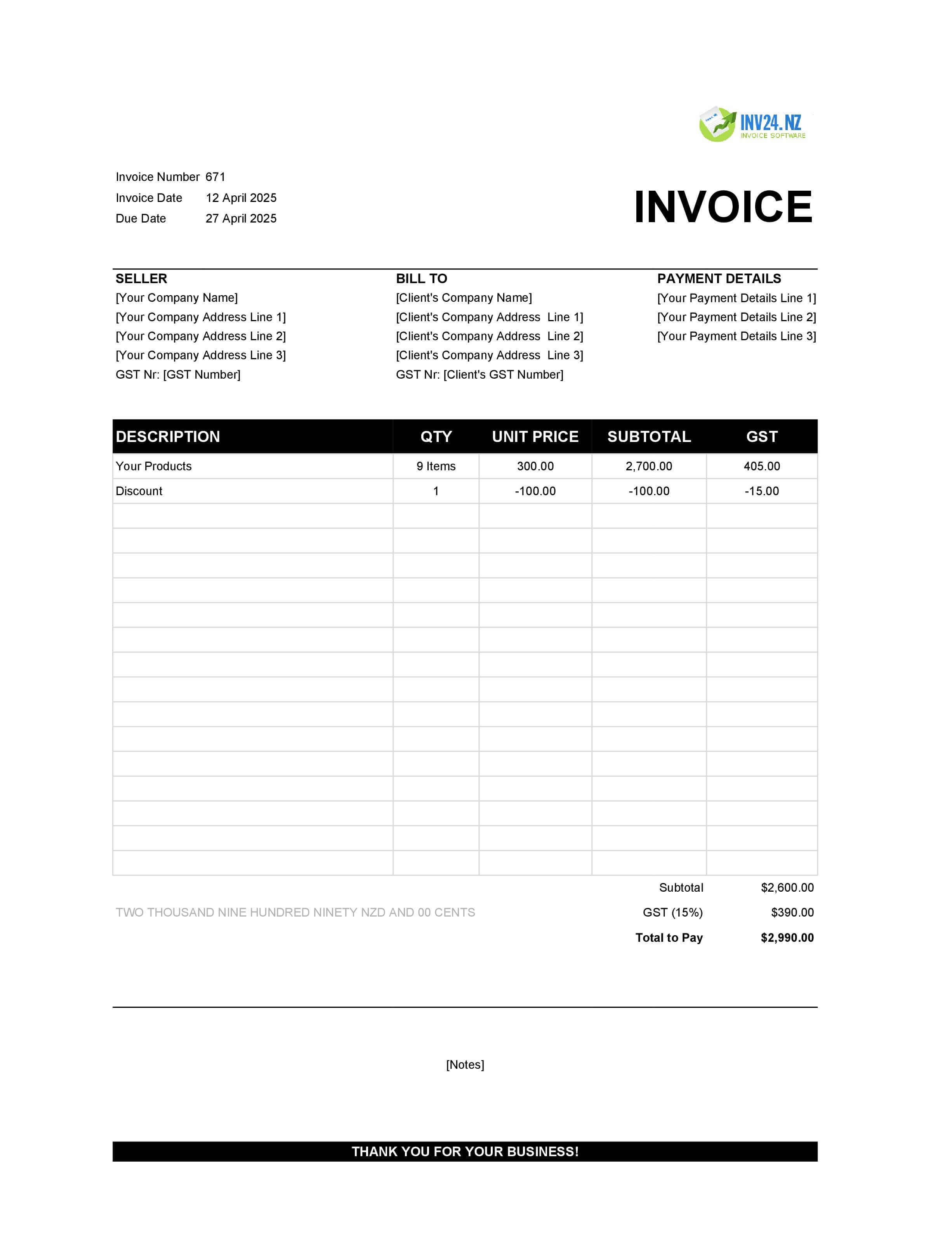
A product invoice includes general content such as invoice date, due date, product description, tax details, product breakdown, total product cost, applicable GST rate, GST amount, and total amount payable and so on. Additionally, terms and conditions of the trade agreed between the buyer and seller are also mentioned. Despite this, the product invoice is only limited to products which are dispatched to customers and does not include services.
Purpose of a Product Invoice
The prime purpose of the product invoice, is to send a bill, while collecting payment from customers who have received the goods or products from the seller or supplier. Generating the invoice has accounting and operational impacts as the invoice is considered as a request from the business to make payment.
List of Attributes That Are Specific to Product Invoices
Product Description
Product description, as the name suggests, describes the basic features and characteristics of the products which are delivered to the customers. It will detail, the name of the product and also show the material which are used in the product. Also, product dimensions, product functions, and size are also mentioned. This helps the customers and businesses to understand the dynamics of the products, for identification purposes.
Product Price
This feature is one of the most essential components of the invoice and is even thought of as the backbone of the invoice. The reason being, that the product price refers to the financial value of the goods dispatched to the customers. This should be copied using a validated and signed source document such as a trade agreement or purchase order. It is also considered good practice to attach the source document with the invoice in order to enhance the billing record's credibility.
Product Quantity
The product quantity is also considered as an important aspect of the invoice. It refers to the volume or number of the goods dispatched to the customers. It is important, as it significantly contributes to the total invoice amount. This means that any error or misstatement in the product quantity will lead to an impairment of the invoice’s credibility. That is why the invoice quantity must be updated with accuracy, based on source documents.
Sources to Update Product Data for Product Invoices
The following lists some of what are considered as authentic sources used to collect essential data (quantity and price), for the product invoice.
Purchase Order
The purchase order acts as a primary document of trade and it is generated by the buyer and accepted by the seller. Hence, it is a wise move to extract essential details such as the price agreed, product description, and quantity from the purchase order as both parties had already agreed on the content and data in the purchase order. Further, there will be occasions when the business may decide to dispatch goods in more than one shipment, against the total quantity ordered in the purchase order. Therefore, it is best practice to reconcile the quantity in the invoice with the quantity in the purchase order.
Goods Dispatch Note
The quantity in the invoice needs to be updated using the goods dispatch note. This helps ensure that the customer is billed and invoiced for the quantity which they have received. For instance, if the goods dispatch note shows that 40 units of product-A is dispatched to the customer, it is important to confirm that the customer is billed and invoiced for those 40 units only.
In practice, it is important to note that multiple goods with multiple dispatch notes can be attached to a single invoice. Hence, it is essential to ensure continuous reconciliation of the goods quantity between the invoice and dispatch notes. In this way, it helps to keep updated records, while avoiding any potential disputes. This is the prime purpose of having accurate and complete invoicing records.
Accounting and Operational Impact of Generating a Product Invoice
From the seller's perspective, the generation of product invoices leads to the recording of the revenue or income in the financial system. In other words, when an invoice is generated, revenue is credited and receivable is debited.
On the other hand, the relevant cost is recorded by debiting the cost of sales (expenses) and crediting the inventory (assets). So, in this way, any difference in the sales and cost of sales is taken as profit or loss on the sales transaction or sales invoice.
The operational impact of the sales transaction, is reducing the number of units sold to the customers. Similarly, payment is collected at the due date, after the product invoice is sent to the customer.
How to Create a Product Invoice
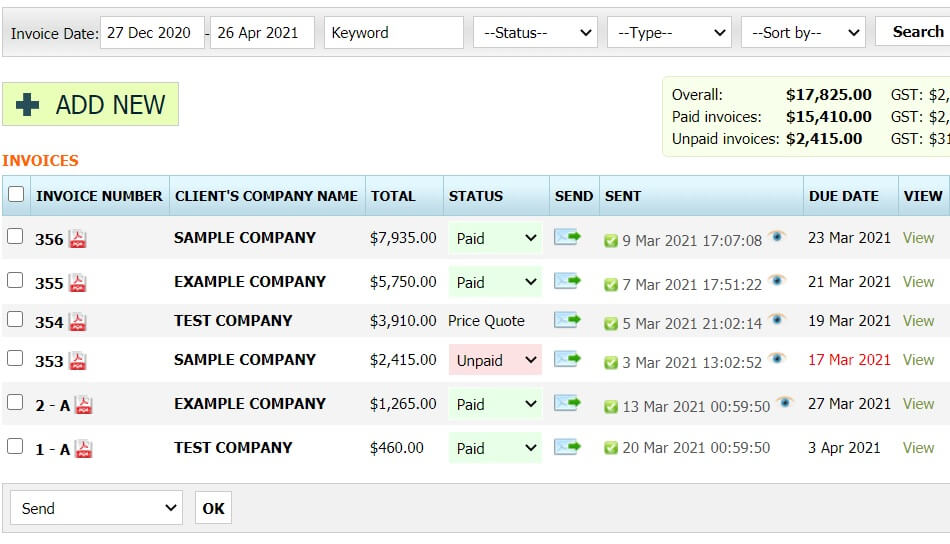
Method 1: Use our simple invoice software
Method 2: Download a free product invoice template
Email Template for Sending Product Invoices to the Customers
Dear {Customer Name},
This email intends to inform you that invoice # XXX was generated for the products dispatched dated {Dispatch Date}.
Here are specific details of the trade for which the invoice was generated.
Product description: {Product Description}
Product invoice date: {Product Invoice Date}
Product dispatch date: {Product Dispatch Date}
Product quantity: {Product Quantity}
Product price: {Product Price}
Invoice total: {Invoice Total}
Thank you for making the purchase with the details above. We have enclosed the attachment to facilitate operational ease and purchase records.
Please review the above details, in terms of content and numbers and ensure that the payment is made within the due date, using the following details.
Payment details:
{Your Payment Details}
We again thank you for your cooperation and coordination and expect payment within the due date. We appreciate your business and look forward to serving you again.
{Your Name}
{Your Post in the Company}
{Your Company Name}
Conclusion
A product invoice is a bill which is generated by the seller. It is then sent to the customer to collect payment for the goods against the products which have been delivered to them. This type of invoice is considered to contain essential transactional information. This information includes, invoice date, the invoice due date, product description, product price, product breakdown or listing, and other pertinent information related to trade.
The prime purpose of generating and sending these product invoices is to collect payment from customers. Importantly, this process also has an accounting and operational impact. The accounting impact is recording numbers such as sales and receivables.
Source documents including purchase orders and goods dispatch notes support the creation of the product invoice. Copies of the source documents are often attached to the invoice and in doing so, this will enhance the credibility of the invoicing record.
CREATE INVOICE ONLINE
Invoicing Tools for New Zealand: